Φ-Framework Report: Valve Corporation
Organizational coherence analysis through the See / Spec / Split lens
I. The Company at a Glance
Valve Corporation, founded by Gabe Newell and Mike Harrington in 1996, is the most profitable per-employee company in gaming, and arguably in technology. It operates Steam (the dominant PC game distribution platform, ~75% market share), develops first-party games (Counter-Strike 2, Dota 2, Deadlock, Half-Life), and manufactures hardware (Steam Deck, Index VR). Newell holds majority ownership; the company has never taken external funding and has no obligation to disclose financials.
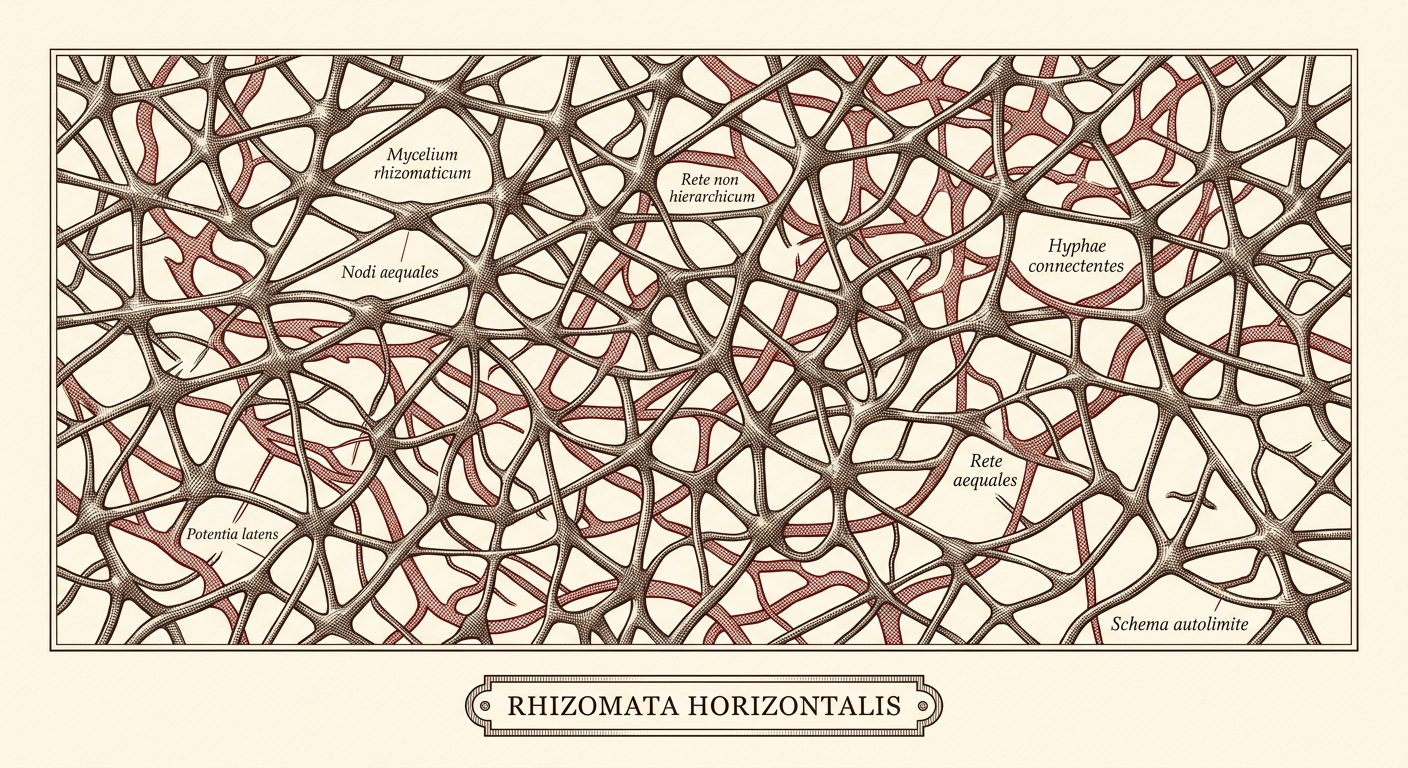
The organizational design claim: no managers, no hierarchy, no assigned projects. Employees choose what to work on. Desks have wheels. Teams form and dissolve organically. Peer evaluation determines compensation. This has been the story since the 2012 Employee Handbook went public.
The actual structure reveals contradictions the handbook does not acknowledge.
II. Declared Organizational Structure
Valve’s Employee Handbook describes four principles that define the firm’s coordination architecture:
| Principle | Mechanism | Φ Channel |
|---|---|---|
| Open allocation | Employees choose projects; desks on wheels enable physical co-location | Φcomm (face-to-face) |
| Cabal formation | Temporary, multidisciplinary groups form around project proposals | Φcomm (peer persuasion) |
| Peer evaluation | Stack ranking across 4 dimensions: skill, productivity, group contribution, product contribution | Φsurface (formal process, annual) |
| T-shaped hiring | “Would I want this person as my boss?” — hire people better than yourself | Φrule (hiring criteria) |
Employees are loosely categorized into four domains: administration, game development, Steam platform, and hardware. The Steam team reportedly has ~79 people. Hardware had ~41 in 2021. Game teams range from 15–50 per title.
III. The Hidden Architecture
Between 2013 and 2023, a consistent picture emerged from former and current employees that contradicts the handbook’s utopian framing. Three structural features shape how Valve actually operates:
1. The Shadow Hierarchy
Jeri Ellsworth, fired in the 2013 “great cleansing,” described Valve as a “pseudo-flat structure” with “a hidden layer of powerful management structure.” The metaphor she chose: high school. There are popular kids who have acquired power, troublemakers who try to change things, and everyone else navigating between.
The framework predicts this (Corollary 5a): when a declared structure deviates far from the structural attractor, the actual coordination network converges toward the attractor anyway. Flat orgs develop informal hierarchies. At Valve, the informal hierarchy stays invisible because Valve publishes no org chart to contest, no reporting line to appeal, no role description to hold anyone accountable against. The shadow structure runs on pure Φcomm, with no Φsurface to make the power distribution legible.
2. The Stack-Rank Feedback Loop
Valve’s annual peer evaluation determines compensation. Employees rank each other across four dimensions. Valve designed the system as a meritocracy. In practice, it rewards work that peers can see and punishes work that is diffuse or invisible:
- Work that peers see gets rewarded. Work that peers don’t see doesn’t.
- Employees time risky projects early in the year, then shift to visible “safe” projects before review season (recency bias).
- The stack-rank system undervalues infrastructure, maintenance, moderation, and diversity efforts because peers cannot easily see or attribute their value.
- The ranking reinforces existing social hierarchies: those with more social capital get higher rankings, which gives them more influence over future rankings.
3. The Shipping Problem
Open allocation means no one can assign someone to finish unglamorous work. Teams start games but don’t ship them. Between 2013 and 2020, Valve released two major titles (Artifact, Half-Life: Alyx) for a studio of 350 people. Gabe Newell acknowledged in 2020 that the flat structure had “slowed output” during the 2010s.
Steam’s revenue made this economically painless. $17B/year in platform revenue means shipping games is a bonus, not a survival requirement. The framework predicts this (Corollary 5b): when selection pressure relaxes, convergence toward the structural attractor stalls. Valve can tolerate deep coordination failures because Steam’s revenue insulates it from the competitive pressure that forces structural adaptation.
IV. Φ-Channel Analysis
Applying the framework: where are the information-processing channels strong, weak, or misallocated?
| Channel | Domain | Evidence | Level |
|---|---|---|---|
| Φsurface | Steam platform | Store metrics, user analytics, revenue dashboards. 79 people operate a $17B platform because the substrates carry the load. | high |
| Φsurface | Organization | No project dashboard, no cross-team visibility. Desk-tracking via network connections is the closest thing to an org-level substrate. | absent |
| Φformal | Hiring | Clear documented criteria (“T-shaped,” “would I want them as my boss?”). One of Valve’s few explicit protocols. | high |
| Φformal | Handoffs & shipping | No definition of done, no cross-domain handoff protocol. Ellsworth: “no process to deliver goods.” No failure detector (F) and no recovery mechanism (K) for stalled projects. | absent |
| Φtacit | Game development | Decades of accumulated coordination patterns: who works well together, which cabals produce, how to navigate the social graph. Fragile to turnover but turnover is low. | high |
| Φtacit | Power structure | The shadow hierarchy is pure Φtacit: undocumented, undiscussable, learned only through experience. Newcomers lack access to the real coordination network. | misallocated |
| Φcomm | Team formation | Desk-wheel migration, cabal formation, face-to-face persuasion. The primary coordination mechanism for nearly everything outside Steam ops. | high |
| Φcomm | Routine coordination | Φcomm handles work that should be in Φformal: project staffing, resource allocation, shipping decisions. Expensive channel doing cheap work. | misallocated |
V. Where Time Dies
Applying See/Spec/Split to identify the queues where value waits:
| Queue | What Waits | Why It Waits | Severity |
|---|---|---|---|
| Project staffing | Ideas that need people | Open allocation means you must sell your project to peers. Social capital > technical merit. Good ideas from low-status employees die. | Critical |
| Cross-domain handoffs | Hardware that needs shipping logistics; games that need platform integration | No handoff protocol. Ellsworth: “couldn’t find a way to make a process to deliver goods inside the company.” | Critical |
| Last-mile shipping | Games that are 80% done | Finishing is unglamorous. Open allocation incentivizes starting new things over finishing existing ones. Stack ranking rewards novelty. | Critical |
| Maintenance & moderation | Steam forums, community management, ongoing game updates | Invisible work. Not stack-rank-legible. Nobody volunteers. Steam forums are “rife with unmoderated hate speech.” | High |
| Diversity & inclusion | Hiring pipeline diversification, internal culture initiatives | “Value-add isn’t immediately obvious.” No management mandate possible in flat structure. Homogeneous peer group reproduces itself. | High |
| Collective decisions | Company-wide policy (BLM response, content moderation) | No decision-making protocol for org-level choices. Months of debate, no resolution. Either Gabe decides unilaterally or nothing happens. | High |
VI. The Paradox of Peak Performance
Valve works spectacularly well by every financial metric while exhibiting textbook coordination failures. $49M revenue per employee. 60% operating margins. A platform that processes billions in transactions with 79 people. And yet: a game division that ships fewer titles per decade than studios a tenth its size.
The framework explains the coexistence. Steam runs on Φsurface (metrics, dashboards, user data) and Φformal (APIs, store policies, revenue share formulas, automated systems). These channels are cheap, persistent, and scalable. That is why 79 people can operate a $17B platform.
Game development at Valve runs on Φcomm (persuasion, reputation, face-to-face coordination) and Φtacit (who works well together, who has influence, how the social graph actually functions). These channels are expensive, fragile, and plateau at small groups. The ~200 game developers generate most of the Rnovel (creative decisions about what to build) but also burn Φcomm on Rroutine that should be in protocols (staffing, handoffs, shipping).
Steam’s surplus absorbs the game division’s coordination waste. This is selection relaxation (Corollary 5b): the competitive pressure that would normally force Valve to build Φformal for its game teams simply doesn’t exist when the platform prints money. If Steam’s margins ever compress, the flat structure faces the coordination costs it has been deferring for a decade.
VII. See / Spec / Split Applied
If Valve wanted to fix its coordination failures without abandoning the flat structure, the framework suggests three moves:
1. See the Queue
Valve has no organizational Φsurface. Nobody knows what projects exist, how many people are on them, what’s stuck, or what’s close to shipping. The desk-tracking system (which monitors computer connections to guess desk locations) is the only substrate that makes organizational state visible.
First move: A single internal dashboard showing every active project, team size, and time-since-last-milestone. Pure visibility, not management control. Let the flat structure make informed choices about where to apply effort.
2. Spec the Handoff
Ellsworth couldn’t ship hardware because there was no process to deliver physical goods. Games stall at 80% because there’s no definition of “shippable.” The BLM response took months because there was no decision-making protocol for org-level choices.
Second move: For each domain boundary (games→platform, hardware→logistics, org→external communications), write down what “ready for the next station” means. Convert the Φtacit that long-tenured employees carry in their heads into Φformal that newcomers can read. This also requires building the R/F/K triad: rules for the normal case (R), a way to detect when work isn’t ready (F), and a defined path to fix it (K). Valve currently lacks all three outside of Steam ops.
3. Split the Traffic
Not everything needs open allocation. Valve already implicitly splits: Steam platform work is more structured than game development. But the split isn’t acknowledged or designed.
Third move: Explicitly separate Rnovel work (new game concepts, R&D, prototypes where the answer genuinely doesn’t exist yet) from Rroutine work (shipping, maintenance, moderation, updates where the path is known). Rnovel thrives on open allocation and Φcomm. Rroutine needs commitment devices, Φformal, and someone who owns the last mile.
VIII. The Succession Question
Gabe Newell holds majority equity and functions as the implicit decision protocol for org-level choices. His judgment substitutes for the Φformal that Valve never wrote. Content policy, major hiring decisions, strategic direction: these all route through Newell because no other mechanism exists.
The Φtacit/Φformal ratio at Valve is extremely high. Most coordination patterns are undocumented. If Newell departs, Valve simultaneously loses the implicit decision protocol (his judgment) and exposes the absence of Φformal underneath. The framework predicts a deep reorganization valley (Prediction 4): the deeper the tacit-to-formal ratio, the larger the capacity drop when disruption occurs.
Valve’s deepest structural risk: Valve built the flat structure around one person’s ownership authority, and no mechanism exists to transfer that authority within a flat org.
IX. Summary Assessment
| Dimension | Rating | Notes |
|---|---|---|
| Φsurface (platform) | Strong | Steam metrics, user data, revenue dashboards. World-class. |
| Φsurface (organization) | Absent | No project tracking, no cross-team visibility, no staffing data. |
| Φformal (hiring) | Strong | Clear documented criteria, high bar, T-shaped preference. |
| Φformal (handoffs + decisions) | Absent | No definition of done, no cross-domain protocols, no org-level decision process. Missing R, F, and K. |
| Φtacit | Strong | Decades of accumulated coordination patterns. High tacit-to-formal ratio makes reorgs dangerous. |
| Φcomm (team formation) | Strong | Cabal model, desk mobility, face-to-face persuasion. |
| Φcomm (quality) | Misallocated | Bandwidth consumed by social positioning, not coordination. |
| Succession readiness | Critical risk | Founder = implicit governance. No transfer mechanism. |
| Financial resilience | Exceptional | $17B revenue, 60% margins, no debt, no external shareholders. |
Four coordination channels, one parent:
Φsurface: substrates that make state visible without conversation (dashboards, boards, CI).
Φformal: documented protocols that encode expectations without negotiation (handoff specs, checklists, decision criteria).
Φtacit: learned routines and institutional memory distributed across people. Accumulates with time, destroyed by reorgs and turnover.
Φcomm: real-time human communication. Most expressive, most expensive, least scalable.
Φrule = Φformal + Φtacit: total protocol capacity. The formal/tacit distinction is load-bearing: it explains reorg valleys.
SEE the queue — make work visible
SPEC the handoff — define “ready”
SPLIT the traffic — not everything needs the bottleneck
Applied recursively. Stop at the compression floor.